
|
|
|
💧 Water Management · Interview series
| |
|
Every edition of Green Energy Expo & Romenvirotec brings together companies, industry experts, public authorities and decision-makers committed to advancing the water sector. Beyond the technologies showcased and the projects on display, it is the people behind them — their expertise, vision and collaborative spirit — who are driving innovation and shaping the future of water management.
|
To spotlight these voices, we are launching a new interview series featuring leading professionals from across the water industry. Each conversation will explore the challenges facing the sector, emerging technologies, investment opportunities and the partnerships that are helping build more resilient and sustainable water infrastructure.
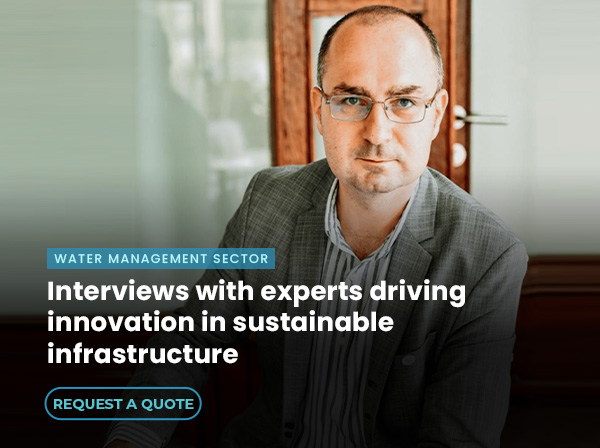
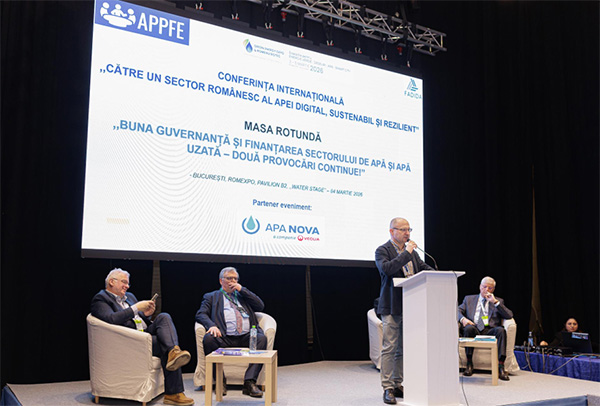
We begin the series with Florian Burnar, President of the Partnership for Projects and European Funds Association (APPFE) and a partner of Green Energy Expo & Romenvirotec. In this interview, he shares his views on investment in water infrastructure, the sector's priorities and the opportunities that will shape its future.
|
|
First guest
Florian Burnar
President — Partnership for Projects and European Funds Association (APPFE), partner of Green Energy Expo & Romenvirotec.
|
|
|
|
1
|
What is the most overlooked challenge facing Romania's water infrastructure?
|
|
| |
|
The lack of adequate protection for critical water infrastructure — water sources, treatment plants and pumping stations.
Protecting critical infrastructure must become a top priority for both water utilities and public authorities. The first step is to formally recognise and certify these assets as „critical infrastructure" in line with the relevant legislation. Once this status is granted, responsibility for coordinating and overseeing the necessary protection measures should rest with the State, working in close cooperation with local authorities, which are legally responsible for ensuring the delivery of public water services.
Public safety is directly linked to the resilience and security of water infrastructure. This requires both operational preparedness and long-term investment, including:
| • |
carrying out comprehensive risk assessments conducted by qualified professionals, covering natural disasters, cyberattacks, military threats, environmental incidents, public health risks and other potential systemic or local threats; |
| • |
developing dedicated emergency operating procedures, including response scenarios, clearly defined responsibilities, resource allocation plans and regular staff training, supported by the appropriate technical equipment; |
| • |
strengthening the physical security of strategic water infrastructure, particularly facilities located in remote areas or within large sanitary protection zones; |
| • |
investing in greater system resilience by expanding treatment capacity, increasing water transmission, storage and pumping capacity, interconnecting major transmission and distribution networks, and developing additional groundwater sources both within and outside large urban areas; |
| • |
ensuring redundant power supplies for water treatment and pumping stations through multiple independent electricity sources, at a minimum to maintain essential water pressure and continuity of supply. |
Strengthening the resilience of water infrastructure is no longer simply a technical challenge — it is a matter of national security, public safety and long-term sustainability.
|
|
|
2
|
What is the biggest water-related risk Romania should be preparing for over the next decade?
|
|
| |
|
The most pressing risk is a significant decline in available water resources, with some regions potentially facing severe water shortages.
Romania ranks 23rd among EU Member States in terms of renewable freshwater resources per capita, placing it among the countries with relatively limited water availability.
Climate change is already intensifying water-related challenges across Europe, and Romania is no exception. Rising temperatures, prolonged droughts and increasingly severe floods are putting pressure on ecosystems, threatening public health and disrupting economic activity. While Cyprus and Malta experience the highest levels of seasonal water stress in the EU, countries such as Greece, Portugal, Spain and Romania are also increasingly affected, particularly during the spring and summer months.
Against this backdrop, reducing water losses must become a strategic priority. With more than 45% of treated water currently lost across parts of the network, improving the efficiency and resilience of water infrastructure is essential to safeguarding Romania's water resources for the future.
|
|
|
3
|
Which technology has the greatest potential to transform the way we manage water resources?
|
|
| |
|
Digital technologies will have the biggest impact.
Digitalisation has the potential to fundamentally change how water systems are operated, monitored and maintained, making them more efficient, resilient and responsive.
Key areas where digital technologies can deliver significant benefits include:
| • |
Real-time monitoring and control of treatment plants, pumping stations and wastewater treatment facilities through advanced SCADA and automation systems, supported by data analytics, early warning systems and rapid incident response procedures. |
| • |
Digital mapping of water supply and sewerage networks, enabling faster maintenance interventions, more accurate asset management and better planning of future infrastructure investments. |
| • |
Reducing water losses by using smart monitoring, leak detection and predictive maintenance technologies across transmission and distribution networks. |
| • |
Preventing water theft and unauthorised consumption through intelligent metering, network monitoring and advanced data analysis. |
Digital technologies are no longer simply tools for improving operational efficiency — they are becoming essential for building resilient water infrastructure, optimising resource use and ensuring the long-term sustainability of water services.
|
|
|
|
| |
|
The exhibition should include technologies for:
| • | Water treatment |
| • | Wastewater treatment |
| • | Pumping systems |
| • | Energy efficiency |
|
| • | Consumption optimisation |
| • | Stormwater management |
| • | Sludge treatment |
| • | Water loss detection and reduction |
|
|
|
The solutions shaping the future of water management
deserve to be seen.
|
|
|
|
|
If your company offers any of the technologies mentioned above, we invite you to showcase them at Green Energy Expo & Romenvirotec 2027.
|
| |
|
📍 GREEN ENERGY EXPO & ROMENVIROTEC 2027
23–25 March 2027
ROMEXPO · Bucharest
Book your stand and join the community
driving innovation in water management.
|
You received this message after subscribing on our website or a partner website.
If you no longer wish to receive messages, you can unsubscribe via
this link.
|
|
Copyright © EUROEXPO Fairs. All rights reserved.
|
|
